
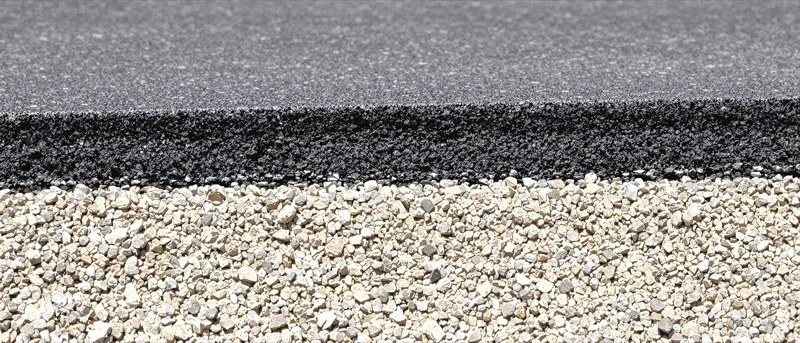
An asphalt binder course is the middle layer of a pavement: it sits on the base, carries and spreads traffic loads, and gives the surface course a smooth, solid platform. Most structural pavements are built as layers, each with a different job, and choosing the right mix for each layer matters more than any single lift.
Here is a plain-English look at base, binder and surface courses, and the mixes contractors commonly use for each.
Why pavement is built in layers
Traffic loads are concentrated at the tire and spread out as they move down through the pavement. The top needs to resist wear, weather and rutting. The lower layers need strength and stiffness to carry and spread the load to the ground. Building in layers lets each lift be designed for its job, and it makes compaction easier, since thinner lifts compact more reliably than one thick lift.
A note on the word "binder"
"Binder" means two different things in asphalt work, and the two are easy to mix up:
- Asphalt binder is the liquid asphalt cement that glues the aggregate together. It is graded by performance, such as PG 64-22, PG 67-22 or polymer-modified PG 76-22.
- Binder course is a pavement layer, the intermediate lift between base and surface.
When a spec sheet lists a PG grade, it is talking about the asphalt binder. When a typical section lists a binder course, it is talking about a layer.
The base course
The base course is the foundation layer. It distributes loads over the subgrade and provides a stable platform for everything above. Depending on the design, a base can be an unbound material, an asphalt base mix, or both.
Asphalt base options from our lineup include:
- BM-1, a base mix for base course work
- SP-19, a 19 mm nominal maximum aggregate Superpave gradation used for structural and base layers
The binder (intermediate) course
The binder course is the structural middle. It adds strength, helps resist rutting under heavy loads, and corrects minor irregularities so the surface can be placed smooth and uniform. Coarser structural gradations are common here.
Typical choices include SP-19 for heavier structural duty and SP-12.5, a 12.5 mm gradation used for surface and structural layers. On roads with heavy trucks or stop-and-go traffic, a polymer-modified binder such as PG 76-22 can add rut resistance and stability in Florida heat.
The surface (wearing) course
The surface course is the layer drivers see. It has to resist weathering, water, abrasion and rutting while giving a smooth ride and good friction. Finer gradations give a tighter, smoother texture.
- SP-9.5, a fine surface mix, is common on residential streets, driveways and repair work.
- SP-12.5 serves as a surface course on many streets and commercial lots.
- Friction course (FC) and open-graded friction course improve drainage and reduce hydroplaning on high-speed roads.
- Stone matrix asphalt uses a stone-rich matrix for rut resistance on highways and arterials.
Tack coat ties the layers together
Layers only work as a system if they bond. A tack coat (TAC) applied between lifts helps the new layer stick to the one below, so the pavement acts as one structure instead of separate slabs that can slip. Apply tack to a clean, dry surface and let it set before paving.
Typical layer combinations
Our mix selection guide pairs layers by application. A few examples:
- HOA and private roads: SP-19 base with an SP-9.5 surface
- Commercial pads and parking: SP-12.5 or SP-19
- Residential streets: SP-9.5 or SP-12.5
- Heavily traveled roads: Superpave and polymer-modified mixes
Your engineer's typical section or the project specification always governs. These are starting points for planning, not a substitute for a design.
Planning lift thickness and tonnage
As a general guide, 1.5 to 2 inches is typical for overlays, and 3 inches or more for new construction and heavy traffic, often split into more than one lift. Each layer is its own line on your order, so estimate them separately. Our asphalt tonnage calculator converts length, width and thickness to tons for each lift. Confirm density and final quantities with the plant before ordering.
Common layer mistakes to avoid
- Skipping tack. Without tack, layers can slip and crack under turning traffic.
- Using a surface mix for structure. A thin fine mix over a weak base will not carry heavy loads.
- Lifts too thin for the gradation. Coarse mixes need enough thickness to compact.
- Paving over a soft base. No asphalt layer can fix a base that moves under load.
Get the layers right from the start
If you are not sure which mix fits each layer, tell us about the application and traffic load. Our team can recommend the mix type, grade, tonnage and scheduling for the job. Review standard gradations and binder grades on our specifications page, and confirm availability before you specify.