
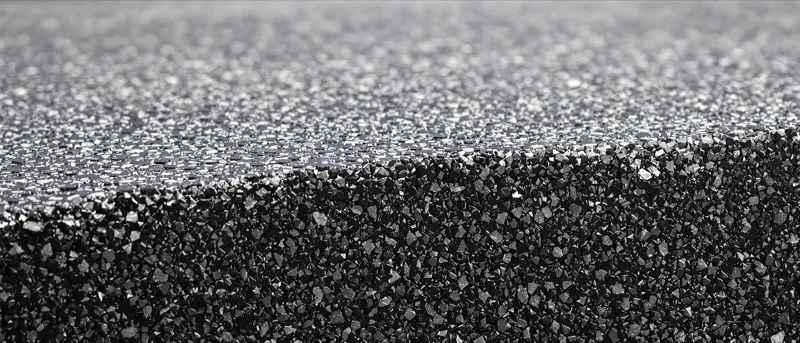
Polymer modified asphalt pays off where pavement takes concentrated, slow or stopping loads in high heat: busy intersections, truck routes and industrial sites. In those spots, the extra elasticity and rut resistance of a binder such as PG 76-22 can mean a longer service life and fewer repairs. On low-traffic residential streets, a standard binder usually does the job.
What polymer modification does
Standard asphalt binder softens as it heats up and stiffens as it cools. Under Florida sun, pavement surfaces get very hot, and a soft binder lets heavy wheels push the mix into ruts and shoves. Adding polymer to the binder changes how it behaves:
- Improved elasticity. The binder flexes under load and recovers, which helps resist cracking.
- Better rut resistance. The mix holds its shape under stop-and-go traffic and heavy axles.
- Stability in heat. It keeps more of its strength at high pavement temperatures.
Reading the binder grade
Performance-graded binders carry two numbers. In PG 76-22, the first number is the high pavement temperature, in degrees Celsius, the binder is graded to handle, and the second is the low temperature limit. A higher first number means the binder resists softening at hotter temperatures. Grades such as PG 64-22 and PG 67-22 are standard performance grades. PG 76-22 typically requires polymer modification to reach that higher rating, which is why it is often used as shorthand for a polymer-modified binder.
You can see the binder options we list on our specifications page. Availability is confirmed per project.
Where the upgrade pays off
Signalized intersections
Vehicles brake, stop, sit and accelerate in the same wheel paths all day. That slow, repeated loading is exactly what pushes a soft mix into ruts and washboarding. Polymer-modified mixes are a common choice for high-stress intersections.
Truck routes and freight corridors
Heavy axles do far more damage per pass than passenger cars. On trucking routes, the added stiffness at high temperature helps the pavement resist permanent deformation.
Industrial facilities
Loading areas and yards where trucks turn tightly, park and idle in the heat see concentrated loads that standard mixes can struggle with.
Entrances and turning areas
Commercial entrances and tight turning areas take scuffing and shear from turning tires. Polymer helps the surface hold together under that stress.
Hot, sunny exposures
Across Indian River, Brevard, St. Lucie and Martin counties, pavement spends a long season under high heat. Where heat and heavy traffic overlap, the case for modification gets stronger.
When a standard binder is enough
Polymer modification is not a cure-all, and it costs more. A standard binder usually makes sense for:
- Residential streets and driveways with mostly passenger cars.
- Low-volume private roads and HOA streets without regular heavy trucks.
- Temporary or short-life pavements.
- Patching and small repairs where matching the existing surface matters more.
Our mix selection guide reflects this: SP-9.5 or SP-12.5 for residential streets, an SP-19 base with an SP-9.5 surface for HOA and private roads, and Superpave or polymer-modified mixes for heavily traveled roads.
Weighing the cost
A polymer-modified mix costs more per ton than a standard one. Whether that premium pays off depends on how much longer the pavement lasts and how much rehab you avoid. On a busy intersection that would otherwise need early repairs and resurfacing, the math often favors the upgrade. On a quiet cul-de-sac, it rarely does.
One cost-effective approach is to use polymer only where it is needed: the surface course at an intersection approach or a truck lane, with a standard mix elsewhere on the same job. Call the plant for current pricing on both options so you can compare them for your project.
Questions to ask before you specify it
- What traffic will the surface carry? Count trucks and buses, not just total vehicles.
- Where do vehicles stop, turn or park? Those zones see the most rutting and shear.
- How long does the owner expect it to last? A longer design life makes the premium easier to justify.
- Does the spec already require it? Some agency and engineered specs call for a modified binder in certain locations.
- Is it available for your dates? Confirm with the plant before the bid, not after.
Handling polymer-modified mix on the job
Polymer-modified mixes can behave differently in the paver and under the rollers. Follow the temperature and compaction requirements in your specification, keep loads tarped, and plan truck flow so mix does not sit and cool. Our post on haul time and mix temperature covers the planning side in more detail.
Produced and tested at the plant
We produce PG 76-22 polymer-modified asphalt at our Gencor-equipped plant in Vero Beach for high-stress duty. Gencor equipment provides stable temperature control and precise mix accuracy, and our on-site quality program samples and tests mixes during production and checks them against each project's specification.
Find out if your project needs it
Not sure whether polymer is worth it on your job? Send the application, traffic and spec through our contact page and request a mix design, or call or text (772) 494-6077. You can also browse our full products lineup.